
Customer Story · Environmental Health & Advocacy
22,000 to 180,000+ text subscribers.In 18 months, with no acquisition budget.
EWG launched texting on top of an email list that had plateaued at 460,000, with no dedicated budget and no new headcount. Eighteen months later text had grown more than 8x, and was out-earning its own fundraising sends with engagement messages.
Most nonprofits don't have huge budgets or big teams. Neither did we.
Environmental Working Group
EWG had no dedicated SMS acquisition spend and no new headcount. The program had to be built on top of surfaces the team already owned.
Having no acquisition budget is what produced the result. The team added a phone field to existing forms instead of buying campaigns, and that became the biggest lever in the program.
The Situation
A small team, a stalled email list, and a hunch about text
By late 2024, EWG's email program had plateaued at roughly 460,000 engaged subscribers. A strong list, but not a growing one.
There was no dedicated budget or headcount for a new channel, so text had to be built on top of what already existed.
The team was ready to launch in September 2024 and deliberately waited until December, letting election-season noise clear before asking anyone to opt into a new channel. The first send reached about 22,000 people, under 5% of the size of the email list sitting next to it.
The Growth Story
From a supplemental channel to a significant one
In 18 months the text list grew more than 8x while the email list it launched alongside held flat. The audience gap between the two channels closed from roughly 25x to about 2.5x.
Revenue followed the list. One-time gift revenue went from $38K in the program's first partial month to $187K across all of 2025, with $90K more through Q2 2026. These figures are one-time gifts only. Recurring gifts are tracked separately and are not included here.
Casey traced the shift to an internal change rather than anything in the numbers. The team stopped treating text as a pilot and started asking how far the channel could go. Sending frequency roughly doubled after the first year, and again in the second.
| What they expected | What actually happened |
|---|---|
| A modest engagement channel | 22K → 180K+ subscribers |
| Supplemental fundraising | Significant fundraising revenue |
| A nice-to-have | One of their most responsive channels |
EWG's own framing, from the Bridge Conference session.
The Blueprint
Get the foundation right once, then let list growth run
The program follows five stages: Build, Grow, Welcome, Cultivate, Fundraise. The team learned quickly which parts of "Build" earned the effort and which did not.
What mattered: platform selection, CRM integration, the welcome experience, and opt-in placement. What mattered less than expected: a "perfect" acquisition strategy, elaborate automations, and complex segmentation.
- 93% of new subscribers came from the web, not paid acquisition.
- Pop-ups: about 50% of sign-ups.
- Sign-up pages: about 40% of sign-ups.
- Website embeds (hero and footer): about 10%.
The Biggest Lever
A phone field on pages they already had
The team added an optional phone field to forms that were already live.
Casey was candid about the source of that 40%: the sign-up page it came from was overdue for a redesign. It didn't matter. Adding the field to an already-live, unpolished form was enough to make it one of the program's two biggest acquisition channels.
The lever was one optional field on a form that already existed. No new landing page, no campaign.

Cultivate Before You Ask
Engagement messages out-earned the asks
By Casey's estimate, roughly 90% of what EWG sends is engagement rather than fundraising: advocacy alerts, impact updates, practical tips, and surveys.
The team built that ratio deliberately, and the payoff shows up in revenue. EWG's engagement texts often rivaled their fundraising sends for revenue, and by the end of the period were regularly out-earning them.
Two-way replies added context no dashboard could show. Casey reviewed incoming replies to see who needed a response, and found something the numbers had hidden. The usual 5–6 p.m. send window was generating a noticeable number of "I'm driving" auto-replies. Even though that window performs well across the industry, the team began reconsidering it.
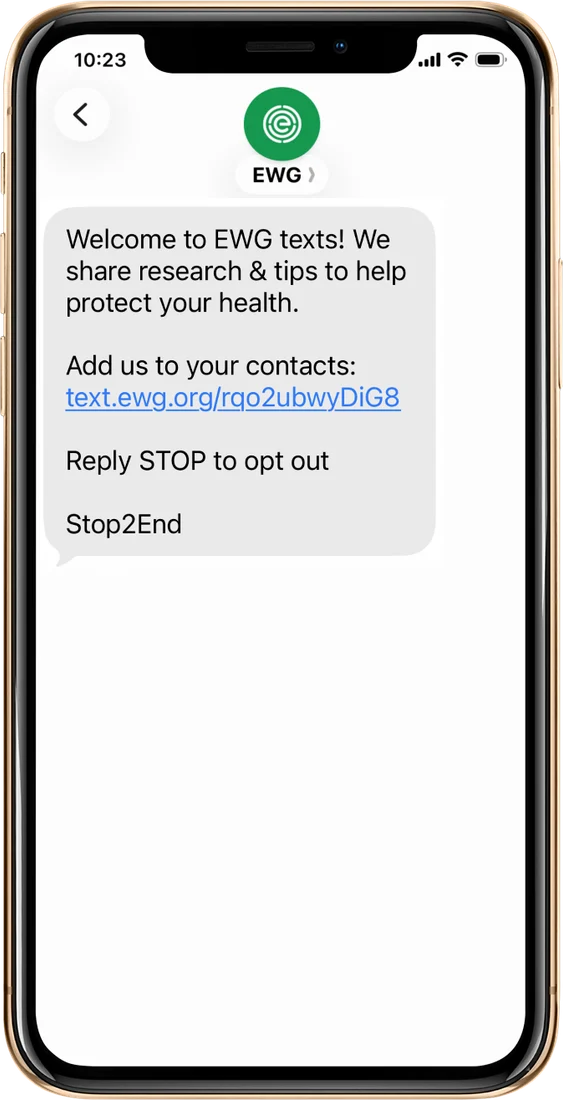
The first message sets the terms
What they send, how to save the number, and how to leave. No ask.
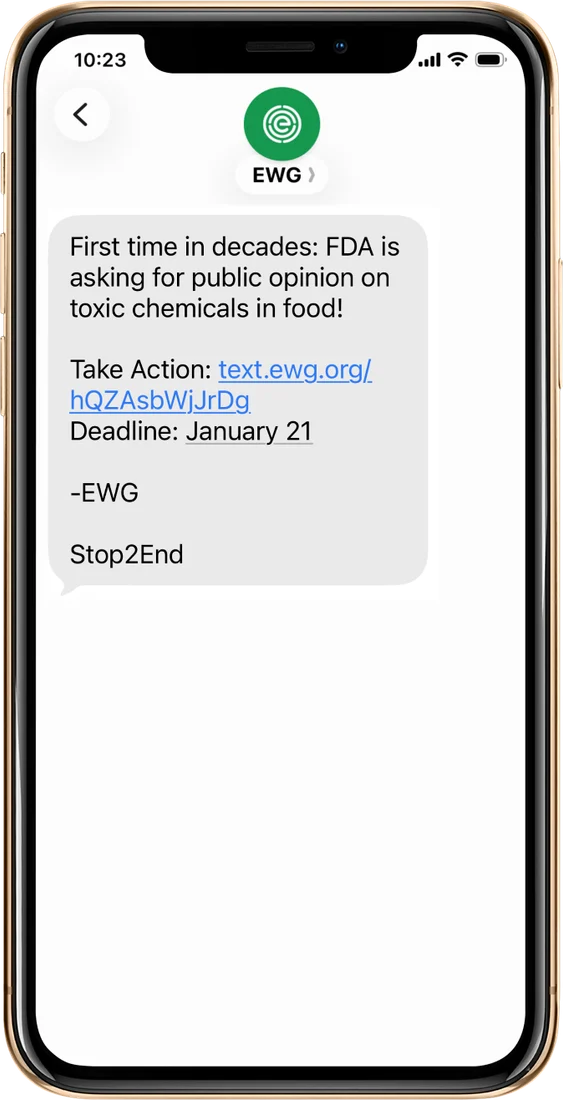
A deadline is a reason to act now
Time-bound advocacy with one link and one date. This is the category EWG sends most.
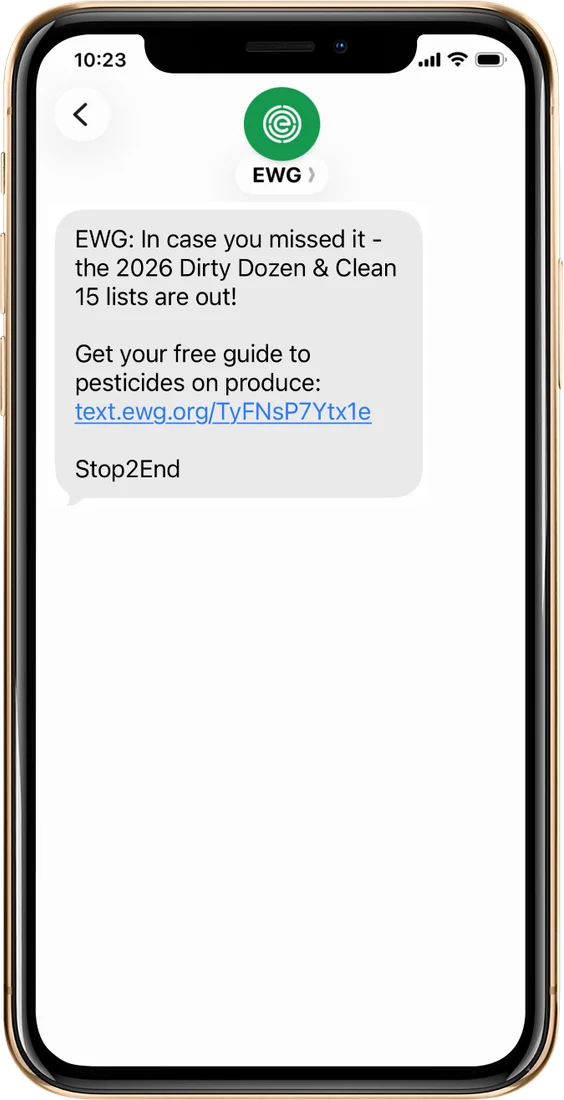
Give something away then ask
The Dirty Dozen list is one of EWG's best-known resources. The text provides it to constituents and then asks for a donation.
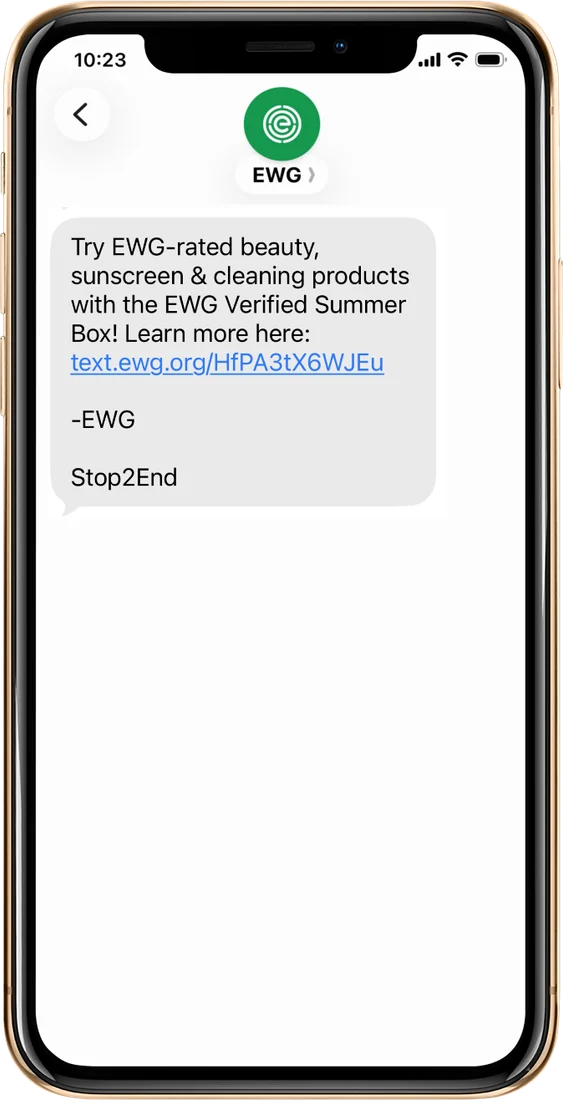
Deliver helpful content
Texting should be a two-way street. Deliver value to constituents and they'll reciprocate with their support.
What They Tested
Three tests, and what each one settled
Every result below is EWG's own, from their program. They are not industry benchmarks and should not be read as targets for another organization.
| Test | Result | Lesson |
|---|---|---|
| Phone field placement (above vs. below email) | No meaningful difference | The field's presence mattered more than where it sat |
| Send time: evening vs. midday | Midday (11a–2p) held ~7% clicks at a 0.73% opt-out | Default to midday, drop late-night, and don't inherit the email calendar |
| SMS vs. MMS | SMS 6% CTR at 5x ROI · MMS 0.7% CTR at 1x ROI | Save MMS for when the image is the point, not the ask |
Hindsight
What surprised them, and what they'd change
Four surprises: passive acquisition beat dedicated campaigns; engagement texts exceeded fundraising for revenue; timing didn't follow the email playbook; and opt-outs fell as messages got more relevant, not less frequent.
- Add the optional phone field to every form from day one, instead of rolling it out gradually.
- Start sending sooner. Texting outperformed the caution the team built in.
- Stop fearing opt-outs. Unsubscribes are a normal, healthy part of running the channel. Chasing zero just makes you too timid to send.
The gap between text and email closed from 25x to 2.5x
The email list held steady at 460,000 while text went from 22,000 to over 180,000.
This worked without a budget and without anything specific to environmental advocacy. Two moves carry over: add the phone field to the form you already have rather than waiting for a redesign, and give the list a reason to stay before you ask it for money.
momoGood Capabilities Used
What was running under the hood
The same capabilities available to every momoGood nonprofit.
- Permission-based text messaging at scaleClear consent and easy opt-out enforced at the platform level, from a 22K first send to 180K+.
- CRM integrationTexts connected to the rest of the program rather than running as a separate list.
- Multi-surface opt-in capturePop-ups, sign-up pages and site embeds feeding one subscriber list — the source of 93% of growth.
- Two-way messagingInbound replies surfaced sentiment the dashboards could not, including the send-window problem.
- Send-time and format testingThe midday window and the SMS-over-MMS finding both came out of controlled tests.

About Environmental Working Group
Environmental Working Group is a nonprofit research and advocacy organization founded in 1993 by Ken Cook and Richard Wiles, built on the idea that public information can protect public health and the environment. EWG is best known for consumer resources including the Skin Deep cosmetics database, the Tapwater Database, and the annual Shopper's Guide to Pesticides in Produce (the "Dirty Dozen" and "Clean Fifteen" lists).
- Founded
- 1993by Ken Cook and Richard Wiles
- Headquarters
- Washington, D.C.additional office in Minneapolis, MN
- President & Co-founder
- Ken Cook
- Focus areas
- Toxic chemicals, agricultural policy, drinking water, consumer product safety
Find them online
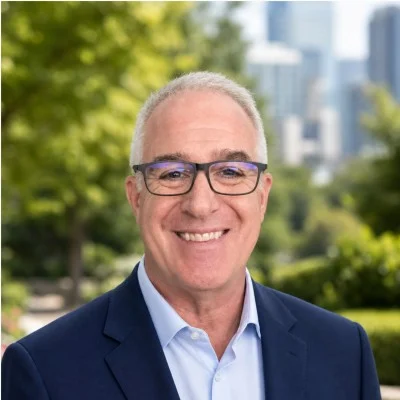
Andrew partnered with the EWG digital marketing team on the launch, segmentation, and the send-time analysis behind this program.
Start with one optional field
EWG grew a 180,000-person list without an acquisition budget. If you have forms already collecting email, you have most of what you need.
Sources & notes
- Growth figures, revenue figures, test results, program details, quotes and takeaways are drawn from "A Blueprint for Taking Your Text Messaging Program from Pilot to Powerhouse," a joint EWG/momoGood session presented by Casey Dumasius (EWG) and Mike Snusz (momoGood) at the Bridge Conference, 2026.
- Revenue figures reflect one-time gifts only; recurring gifts are tracked separately and are excluded.
- The 22,000 figure is the first send's audience. A growth chart in the same session plots the December 2024 point at 17,000. The two are close but not identical. The 22K → 180K+ framing is the one EWG used for the program headline.
- All test results are EWG's own program data, not industry benchmarks. Where the session also presented cross-sector benchmarks from the Nonprofit Text Messaging Insights Report, those are deliberately not mixed into this story.
- Organizational founding, leadership, mission and program details: Environmental Working Group, ewg.org/who-we-are.